
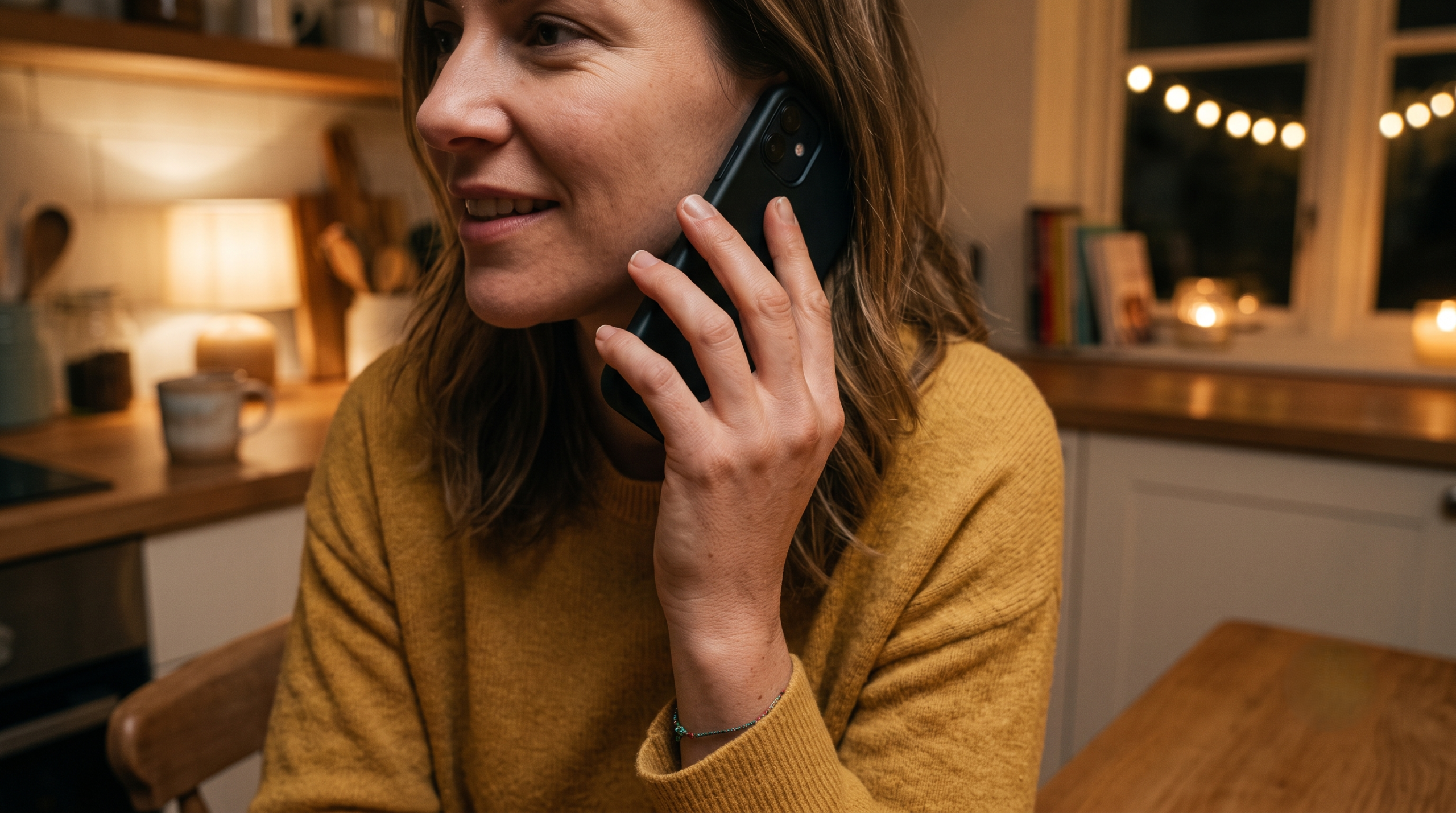
It’s 11:40 p.m. and your phone rings from a number you don’t recognize. You almost let it go. Then you answer and hear your son’s voice — shaky, crying, saying he’s been in an accident and needs money right now.
Every instinct says help first, ask questions later. That’s exactly what the scam is built around.
Don’t try to become a voice expert in the middle of a panic
A cloned voice may sound convincing enough that listening harder won’t help. So don’t make the voice itself the test. Hang up. Then call your family member back using a number you already have saved.
Not the number the caller gives you. Not a callback number in a text. The normal number already in your phone.
If they don’t answer, try another family member or someone who may know where they’re.
A real emergency can survive five minutes of verification.
Ask something that isn’t sitting on social media
If the conversation continues, use a question tied to something recent and private.
Not the dog’s name. Not a birthday. Not a hometown.
Those may already be online. Ask about something from your last conversation, a private plan, or a detail that would be difficult to guess from public posts. Some families also use a private code word. That only works if it stays private, so don’t put it in group chats or social posts.
The pressure matters as much as the voice
These calls tend to push on the same nerves:
- urgency
- secrecy
- fear
- unusual payment methods
“Don’t tell Dad.” “Send it right now.” “Use gift cards.”
“Wire the money.” That combination should slow you down, not speed you up.
Scammers aren’t trying to win an argument. They’re trying to keep you too scared to verify.
Why AI changes this scam
Voice-cloning tools can create usable copies from relatively short audio samples, and public videos give scammers a lot more raw material than people realize.
A birthday clip. A graduation video. A public voicemail greeting.
The result doesn’t have to sound perfect for the scam to work.
It only has to sound convincing during a stressful moment.
That’s a much lower bar.
What if they refuse a video call?
That’s suspicious. It still isn’t proof by itself, because there are real emergencies where a video call may be impossible. But refusal plus secrecy plus urgent payment is a much stronger warning than any one clue alone.
Again, the safest move isn’t to solve the mystery while you’re still on the call. Break the contact and verify through another channel.
What to do before you send money
Pause. Hang up. Call back. Verify.
Not elegant.
Very effective.
And much easier to remember at 11:40 p.m. than a ten-point scam checklist.
Related Reading
Is It Safe to Share Personal Information with ChatGPT?
AI Tools for Beginners: The Complete Guide to Getting Started
Sources & Last Updated
Last updated: August 2026.